


Reishi vs Lion’s Mane: Which Is Better?
Quick Takeaways
- Lion’s mane is generally the better choice for focus, memory, and mental clarity.
- Reishi is better suited to recovery, relaxation, sleep support, and evening routines.
- Both mushrooms contain polysaccharides, but their research and traditional uses are very different.
- Many people use lion’s mane earlier in the day and reishi later on.
- Neither mushroom is psychedelic, and neither contains psilocybin.
Reishi and lion’s mane are two of the biggest names in the field of functional mushrooms. However, they do not share the same effects.
Lion’s mane is taken to boost focus, memory, and cognition, whereas Reishi has a calming effect that promotes relaxation, good sleep, and recovery.
A practical example would be taking Lion’s Mane mushroom before you hit the gym. On the other hand, it makes more sense to take Reishi after working all day and needing your brain to clock out.
Both of these functional mushrooms contain polysaccharides, which can be beneficial. However, the composition and research of these two mushrooms are widely different, so the ideal choice depends on the reason you want to take the mushroom.
What Is Reishi Mushroom?
Reishi (i.e., Ganoderma lucidum) is a reddish-brown mushroom that has been used for a long time in the East Asian region to promote balance, vitality, and longevity.
Chemically speaking, Reishi contains the following compounds:
- Beta-glucans.
- Triterpenes.
- Polysaccharides.
- Sterols.
- Phenolic compounds.
Today, Reishi’s beta-glucans are particularly interesting because of their relationship with the immune system. In a 2023 study that only included healthy adults, researchers found that the intake of reishi-derived beta-glucan for 12 weeks increased CD3+, CD4+, and CD8+ T cells, improved the CD4-to-CD8 ratio, and optimized natural killer cell activity. The researchers also recorded higher IgA levels, which suggests that Reishi beta-glucan may support both innate and adaptive immune responses.
What’s more, its triterpenes give Reishi its naturally bitter taste. This is one reason it is commonly sold as an extract, capsule, tea blend, or gummy.
Read our complete guide to reishi mushroom benefits for a deeper dive.
What Is Lion’s Mane Mushroom?
Lion’s mane (i.e., Hericium erinaceus) is a white mushroom that’s covered in long and shaggy spines.
Lion’s mane contains compounds such as:
- Hericenones.
- Erinacines.
- Beta-glucans.
- Polysaccharides.
- Phenolic compounds.
The most studied relationship is between Lion’s Mane and the nervous system. For example, a 2025 systematic review of 26 studies found that its compounds hericenones and erinacines can stimulate nerve growth factors. Ultimately, these can support neuroplasticity, neuronal survival, and memory.
Human trials found that people who took Lion’s Mane supplements had higher cognitive scores, better mood, and greater numbers of short-chain-fatty-acid-producing gut bacteria. All in all, these findings tell us that Lion’s Mane benefits cognition in a variety of ways, including neuroprotection and actions on the gut-brain axis.
Related – Lion’s Mane mushroom benefits.
Reishi vs Lion’s Mane for Focus and Memory
In short, Lion’s Mane wins this category.
Most of its human research focuses on cognitive performance, memory, and mood. You may find Reishi occasionally in some studies. However, it is not considered the “brain mushroom.”
Remember, Lion’s Mane is not a stimulant, so don’t expect the same feeling after an espresso shot. The appeal of this mushroom is more about having long-term positive effects on your cognition.
Lion’s Mane is relevant for:
- Deep work.
- Studying.
- Mentally demanding jobs.
- Memory support.
- Creative tasks.
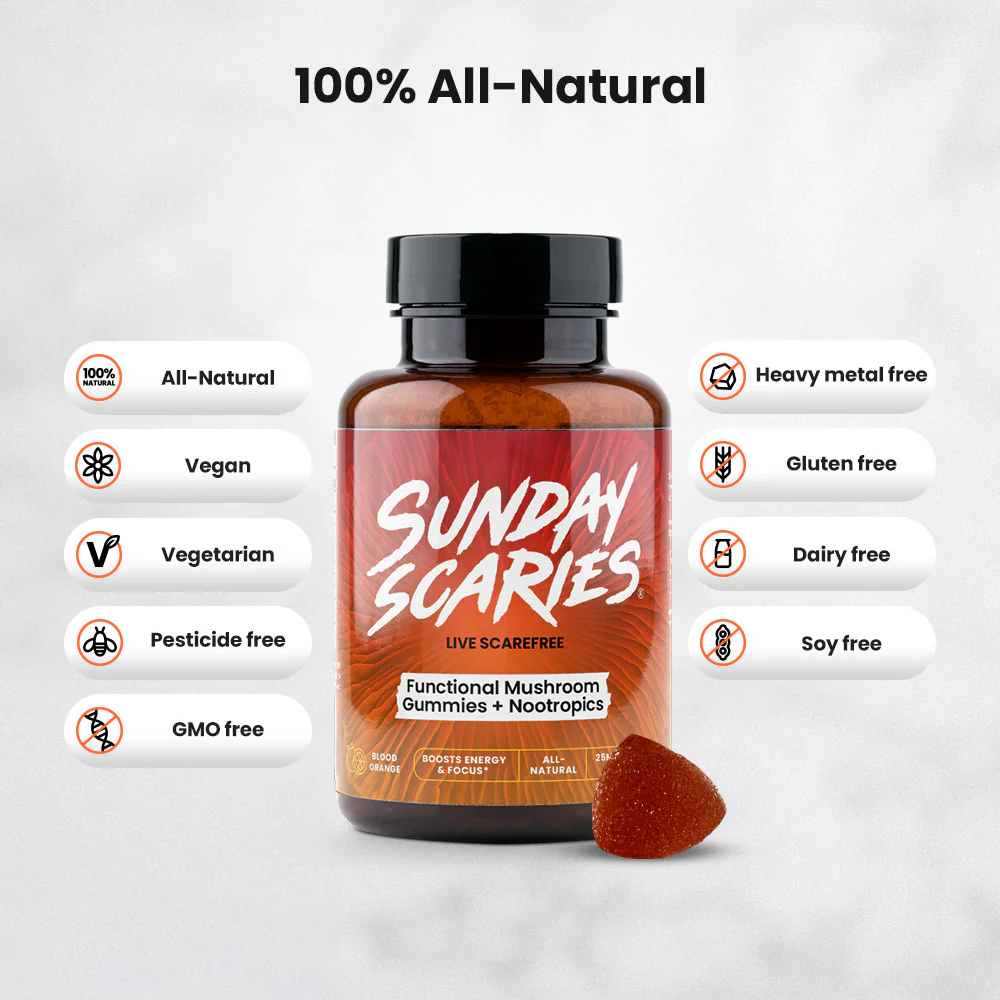
Featured Focus Formula
Lion’s Mane Extract Chaga Ginkgo Biloba Natural CaffeineSunday Scaries Mushroom Gummies for Focus combine organic lion’s mane extract with chaga, ginkgo biloba, and natural caffeine for a more complete daytime focus formula.
Shop Mushroom Gummies for FocusReishi vs Lion’s Mane for Mood and Stress
Reishi is marketed as the anxiolytic mushroom that promotes calmness. On the other hand, Lion’s Mane also has interesting research related to mood and sleep.
In one study, researchers involved overweight or obese adults who took Lion’s Mane supplementation for eight weeks. The results showed that participants had improved scores in depression, anxiety, and sleep issues. Researchers believe these effects were mediated by pro-BDNF and BDNF.
Reishi is more studied for its effects on fatigue, physical recovery, immune balance, and relaxation-related pathways.
In summary, if you want to deal with stress that’s negatively impacting your mental performance, go for Lion’s Mane. If your goal is to feel more balanced and recovered, Reishi is the go-to functional mushroom
Reishi vs Lion’s Mane for Sleep
Reishi is not a sedative, but scientists tell us that some of its compounds may interact with some pathways that mediate sleep.
One study on Reishi and sleep found that supplementation with this mushroom shortened sleep latency and increased sleep duration in mice. The researchers linked the effect to changes in gut bacteria, microbial metabolites, and serotonin-related signaling.
A separate 2024 study took a deep look at the different formulations of Reishi when it comes to fatigue and sleep. Interestingly, taking Reishi as a formulation or extraction influences the outcome, which is why two Reishi supplements may not produce the same results.
Reishi vs Lion’s Mane for Energy
Don’t expect Reishi or Lion’s Mane to act like caffeine, but they still boost your energy in different ways.
For example, Lion’s Mane works better to boost mental energy. So, if your day-to-day activities require some heavy cognitive functioning, this mushroom is for you. On the other hand, Reishi is better for recovery-based energy. Think of it as less about pushing harder and more about supporting the systems that help you feel restored.
Can You Take Reishi and Lion’s Mane Together?
Reishi and lion’s mane complement each other because they cover different parts of the day.
So, a good routine should include:
- Lion’s mane in the morning or early afternoon for focus.
- Reishi later in the day for recovery and relaxation.
There is no requirement to choose sides, but just make sure to check the label on the supplement before you buy it.
| Feature | Reishi | Lion’s Mane |
|---|---|---|
| Scientific name | Ganoderma lucidum. | Hericium erinaceus. |
| Main Benefits | Calm, recovery, and immune support. | Focus, memory, and mental clarity. |
| Compounds | Beta-glucans, triterpenes, and polysaccharides. | Hericenones, erinacines, beta-glucans, and polysaccharides. |
| Best time to take it | Evening time. | Morning or early afternoon. |
| Suited to | Relaxation, sleep routines, recovery, and immunity. | Work, studying, cognition, mood, and mental performance. |
| Immediate effect | No. | No. |
| Can be combined with caffeine | Unnecessary for evening use. | Common in daytime. |
| Personality | The wind-down mushroom. | The get-things-done mushroom. |
Browse the Sunday Scaries functional mushroom gummies collection to compare formulas based on your priority.
FAQs About Reishi vs Lion’s Mane
Is Reishi or Lion’s Mane better for anxiety?
Reishi is great to calm yourself and feel relaxed. On the other hand, Lion’s Mane has human research related to mood and stress.
Is Lion’s Mane or Reishi better for sleep?
Reishi is the better choice for a nighttime routine. Lion’s Mane may still support sleep when mood or racing thoughts are part of the issue.
Can I take Lion’s Mane in the morning and Reishi at night?
This is one of the most practical ways to combine them because their usual uses complement each other.
Which mushroom is better for work?
Lion’s mane is the better choice for work, studying, focus, and cognitive performance.
Do Reishi and Lion’s Mane make you high?
Both are non-psychoactive functional mushrooms and do not contain psilocybin.
Conclusion
Reishi and lion’s mane are very beneficial functional mushrooms, but they shine in different situations.
Let’s summarize what we learned so far:
Lion’s Mane is the ideal choice for focus, memory, mood, and mental performance. Reishi is better for relaxation, nighttime recovery, immune support, and feeling more balanced after tiresome days.
One important thing to keep in mind is that the best answer is not Reishi or Lion’s Mane. It is Lion’s Mane when the day begins and Reishi when the laptop finally closes. Make sure to choose the product based on the type of support you need, stay consistent, and let each mushroom do the job it is known for.
Explore Functional Mushroom Gummies
Browse clearly labelled mushroom gummy formulas designed for focus, stress, sleep, and everyday wellness.
Browse Mushroom GummiesThis article is for informational purposes only and is not intended to provide medical advice, diagnosis, or treatment. Speak with a qualified healthcare professional before starting a new supplement, especially if you take medication, manage a health condition, are pregnant or breastfeeding, or are receiving medical treatment.